
Daniel Baker / In his own words
Artist Statement
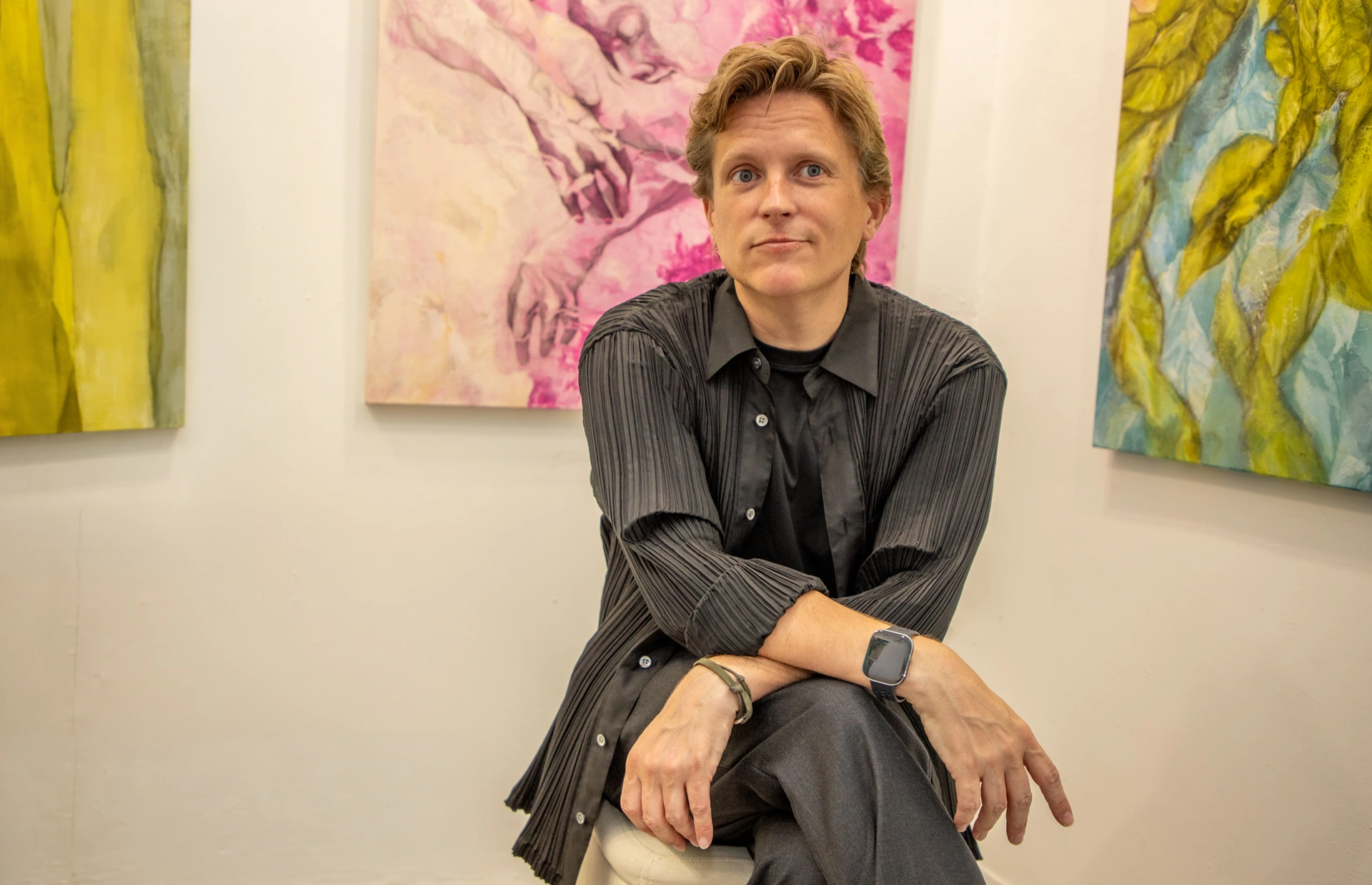
People visiting the studio often ask how I found the figures in my paintings. I begin with abstract color and movement, before settling on a figure. I follow the curves and rhythms that suggest a body, and I want you to share in that discovery.
A sweep of color may suggest a shoulder. As I give it weight and form through light and shadow, I watch how it changes the movement around it. An edge that is too sharply defined can make the figure seem separate from the surrounding color. I make some parts clearer and let others merge into the painted surface.
What I know about the body, how I feel about the painting and what I do with the paint keep affecting one another. I call this ongoing relationship between thinking, feeling and doing Inner Ecology.
How a figure takes shape
In the early stages, visitors often look for shapes in the painted surface, much as we look for shapes in clouds. I pay attention to where a curve turns, where movement gathers and where it changes direction. These suggest where a body might be and what it might be doing.
I often think about Klimt when I work on the edges of a figure. I admire the way he brings softly modeled bodies and flat patterns together. In my own paintings, I want a hand or shoulder to feel convincing while its edges connect it to the surrounding color.
As a curve begins to read as a body bending or an arm reaching, my response to that part of the painting changes. I am responding to what a person seems to be doing as well as to the color and movement. That feeling affects my next choices of line and color. The meaning develops as I work.
You might first follow a band of color and then recognize the curve of a back. Recognizing the body changes how you see that movement, but the color and rhythm are still there. I want you to be able to move between the flow of the paint and the gesture of a body.
Daniel Baker